Vestiaire Collective, a global platform for pre-loved luxury fashion with 6 million items, used the Photoroom API to bring seller photos up to a consistent, premium standard without compromising on product accuracy. In an A/B test that took eight weeks from decision to results, Vestiaire Collective saw a 5% higher rate of liquidity, 3-7% higher unique product page view, and 2% more efficient performance marketing, with no negative impact on digital authentication.
Life before Photoroom
Inconsistent lighting and backgrounds in seller photos
Catalog photos below first-hand luxury standards
High defect rate on generative AI-enhanced seller photos
A years-old in-house tool built for consistency
An improved listing flow added volume that needed to sell
Life with Photoroom
+5% lift in liquidity across all categories
3-7% higher unique product page view
2% more efficient performance marketing
High product fidelity with no negative impact on digital authentication
Eight weeks from decision to test results
"We chose Photoroom over the other platforms we tested because it maintained product fidelity, and Photoroom really helped us make Vestiaire Collective a true fashion destination by creating emotion through product visuals."
— Thomas Hezard, Chief Product Officer at Vestiaire Collective
For 17 years, Vestiaire Collective has given people a place to buy and sell pre-loved luxury fashion. Today, it connects users across 70 countries with a catalog of 6 million items and around 40,000 new listings a day, mostly from private sellers.
Listing photos do most of the selling on a luxury resale platform. "Good visuals are the ones that create emotion, so the buyer wants the item at first sight," explains Thomas Hezard, chief product officer at Vestiaire Collective. "They also need to represent the item well, so the buyer can trust what they're purchasing."
Thomas, an engineer by training who spent five years in strategy consulting, leads product, product analytics and design. As Vestiaire set out to become a go-to platform for people to discover fashion, listing photos became one of his priorities. Most of these photos came from private sellers shooting at home, which meant lots of inconsistent visuals, yet Vestiaire’s catalog had to look like luxury retail while still showing the exact item a buyer would receive.
Inconsistency, inaccuracy, and an outdated in-house tool
When Vestiaire compared its catalog with first-hand luxury retailers, the gap in image quality was hard to miss.
“We looked at how first-hand players create emotion to convince a buyer to purchase a €1,000-plus item. Then we looked at our photos, and the gap was clear. The image quality was different and we needed to bridge that gap.”
— Thomas Hezard, Chief Product Officer at Vestiaire Collective
Three things drove the gap:
Seller photos varied widely: Experienced sellers know good photos help items sell, but first-timers often upload a few unclear shots, and most spend five minutes maximum on a listing, not giving it enough attention. Vestiaire can ask for five pictures, front shot first, but can't control what sellers provide.
The in-house tool was built for consistency: Vestiaire developed its own background removal tool years ago, because nothing on the market was accurate enough at the time. It gave every photo the same look on catalog pages, but couldn't match the image quality of first-hand luxury retail.
More listings raised the stakes: Vestiaire had just improved the way sellers list, which brought more items onto the platform. But more listings only help if they sell.
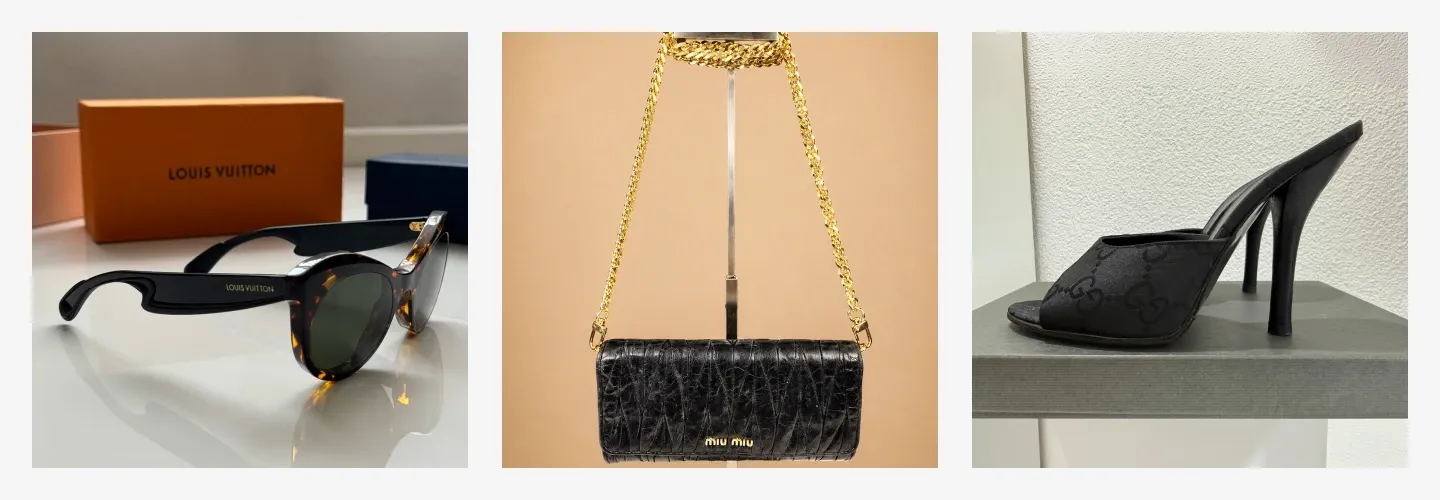 Seller photos as they arrive on Vestiaire, each shot in a different setting and light. Source: Vestiaire Collective
At Vestiaire, a good visual does three things:
Creates emotion that makes buyers want the item at first sight
Represents the item accurately, so buyers trust what they're purchasing
Keeps the experience consistent from listing to delivery, which brings buyers back for repeat purchases.
To prove that visuals like these sell more, Thomas needed more than intuition. So, his team had an AI agent rate the quality of existing listing photos on a scale of 1 to 3. They then compared each photo's quality score with how well that item sold, measured as liquidity.
Vestiaire measures liquidity as the percentage of listed items that end in a transaction. When it's high, more items sell, and sellers see those sales and list again. When it's low, items sit unsold unless prices drop significantly or sellers wait a long time.
Items with higher-quality photos had clearly higher liquidity, which gave Vestiaire the evidence to invest in improving the quality of its listing photos.
But better photos couldn't come at the cost of trust
The analysis also surfaced a risk. Semi-professional sellers were enhancing their photos with generative AI tools, and those listings had very high defect rates due to how LLMs alter products in images.
Vestiaire only accepts returns for fakes or undisclosed defects. So, when a photo hides a flaw, the buyer contacts customer service and the sale often ends in a cancellation. Each one costs Vestiaire the transaction and support time, and risks losing a buyer on a platform that depends on repeat purchases.
Vestiaire also authenticates a share of items digitally from their photos, checking bag labels, stitching, how light reflects off the material, even whether it's leather or plastic.
Any edit that alters those details would stop the team from authenticating items from their photos, and could send buyers an item that doesn't match its listing. So before testing any photo enhancement solution, Vestiaire set guardrail metrics to protect product accuracy.
An AI image editing partner for high-quality, accurate listing photos
Vestiaire already had its in-house background removal tool, so any new solution had to beat it on two fronts: close the quality gap between its catalog and first-hand luxury retailers, and keep every product detail exactly as it is.
The team approached the search in two phases. First, they tested external solutions, including several generative AI tools. Each one changed something about the item. Photoroom improved the quality of the photos without changing the product.
"We tested different GenAI solutions, and each time they changed some details. Then it was no longer possible to authenticate from the pictures or to make sure buyers could trust them. Photoroom maintained product fidelity, and that's clearly the reason we chose it.”
— Thomas Hezard, Chief Product Officer at Vestiaire Collective
Vestiaire tested Photoroom against its in-house tool
In the second phase, Vestiaire tested Photoroom across all listings and categories. It split listings into two random groups, one processed with its in-house tool and one with Photoroom, and compared them across the full funnel:
Engagement: Likes, clicks and unique product page views.
Conversion: Add-to-cart and orders.
Delivery experience: What buyers found when the item arrived, including returns and cancellations.
Authentication: Whether the enhanced photos still worked for digital authentication.
The team also had to make sure the investment made economic sense, since processing applies to every listing, not only items that sell.
Beyond the numbers, Photoroom had to deliver the kind of visual Vestiaire defines as good, the kind a true fashion destination depends on: photos with more emotion that still show the exact item.
"We decided to use Photoroom to create the emotion we were missing, by improving the lighting and creating a feeling of volume for our items. And what we cared about a lot was staying true to the product, making sure product fidelity was there in the picture."
— Thomas Hezard, Chief Product Officer at Vestiaire Collective
They started with the basics of background removal, lighting and shadow, kept generative edits out, and reached results within eight weeks of deciding to test, all while watching for overly edited images that hide defects and misrepresent what a buyer orders vs what they receive.
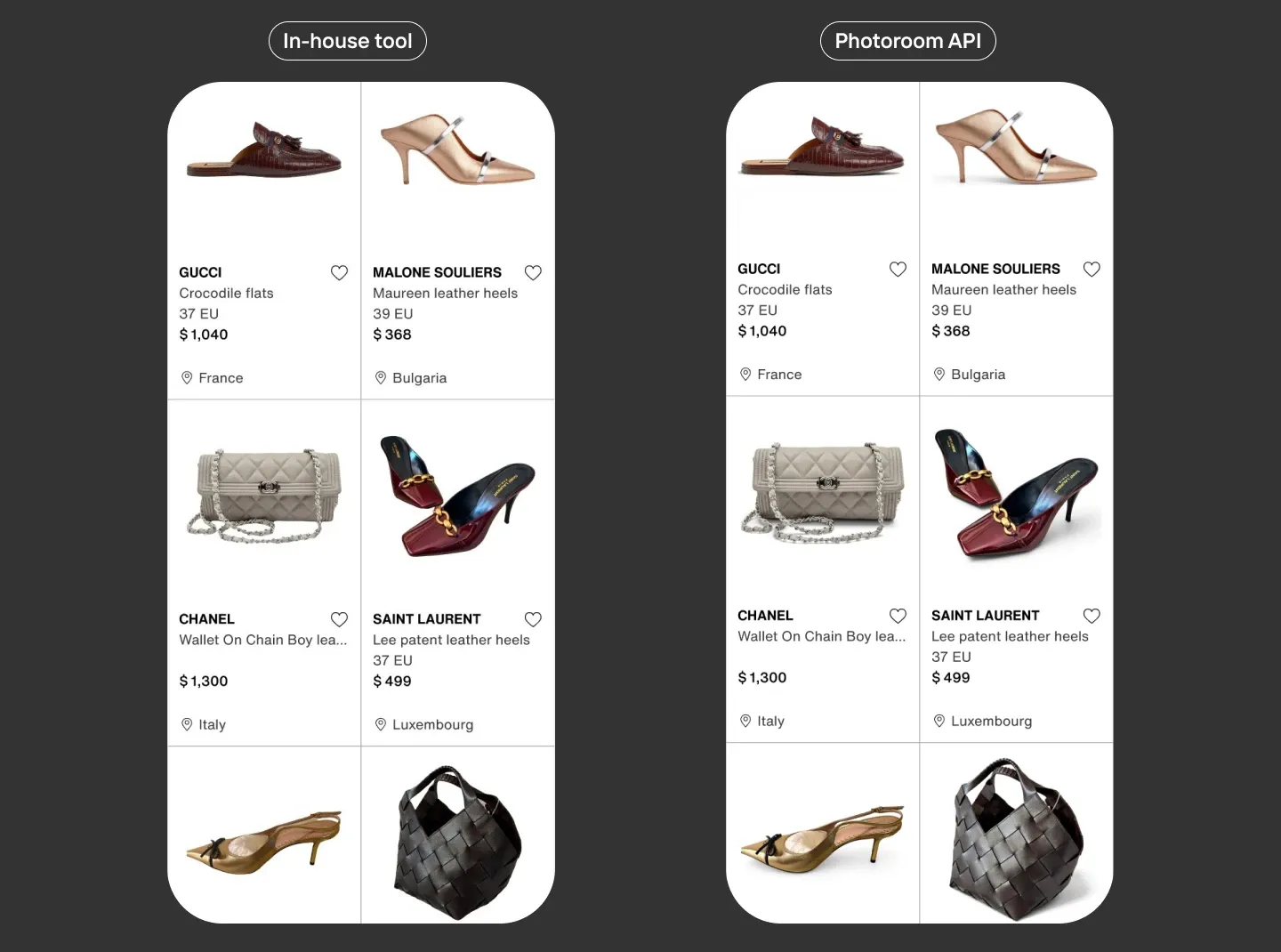 A/B test images of Vestiaire listings, with photos from the in-house tool (left) and the Photoroom API (right). Source: Vestiaire Collective
How Vestiaire processes listing photos today with Photoroom
Vestiaire placed the Photoroom API at the one stage it fully controls: after a seller submits a listing and before it goes live. Sellers list items exactly as they did before, with no extra steps, and the Photoroom API processes the primary photo in three steps.
1. Enhancement
The primary image goes through HD background removal onto a consistent background, AI Shadows, centering and padding, and relighting.
Each edit targets a specific part of the quality gap. HD background removal replaces the low-quality cutouts from the in-house tool. Relighting evens out photos that sellers took at home in every kind of light. AI Shadows add the sense of volume Vestiaire's photos were missing. Together, they give each photo a look of first-hand luxury retail, without changing the item itself.
2. Category settings
Vestiaire sets shadow and lighting differently for each category, depending on whether the item has volume or lies flat:
Bags and shoes: These items have volume, so a larger, darker shadow brings out their shape and creates emotion for buyers. They saw the strongest results in the test.
Clothing: Flat-laid garments have little depth, so they need little or no shadow, and a strong one can make the garment look worse.
"We iterated quite a bit to define the right settings for each category. When you enhance shoes, bags or clothing, you don't need exactly the same shadow or lighting. We iterated using our data, rolled out different settings per category, and in every case, we improved the liquidity of the items on the platform."
— Thomas Hezard, Chief Product Officer at Vestiaire Collective
3. Publication
After Vestiaire's team reviews the listing, the enhanced image goes live as the primary photo.
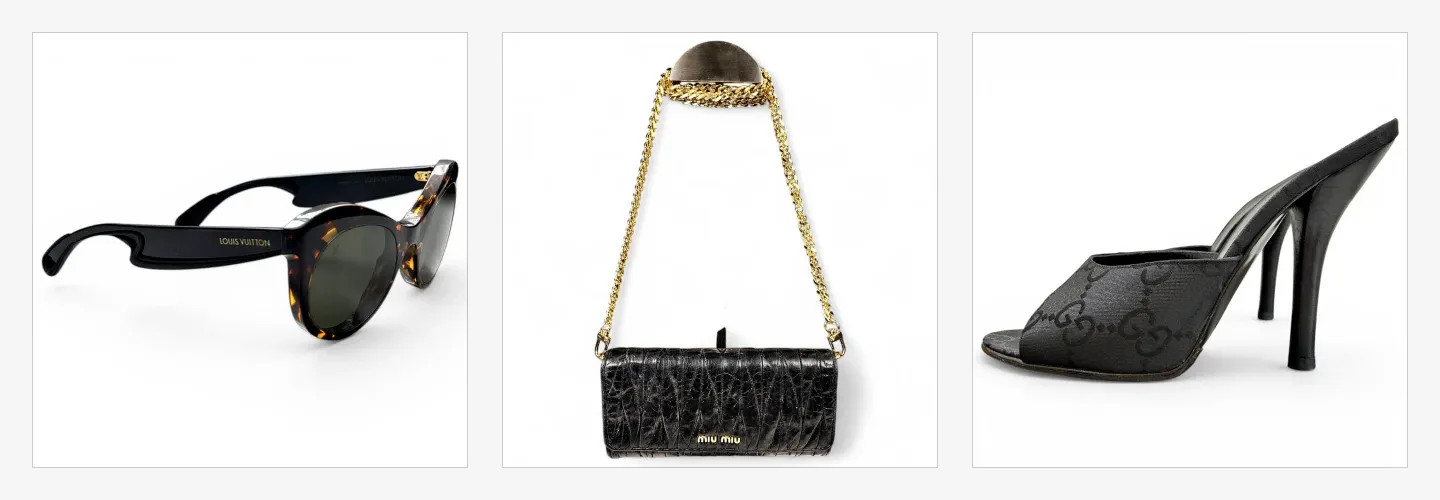 The same three seller photos after Photoroom processing, with shadow and lighting set for each category. Source: Vestiaire Collective
Photos that buyers trust, and listings that sell more
Across a platform that adds around 40,000 new listings a day, the Photoroom group outperformed the in-house control group on every measure:
+5% lift in liquidity across all categories, meaning a higher share of listed items ended in a transaction. Shoes and bags saw a bigger lift in liquidity, and clothing a smaller one.
3-7% higher unique product page view, with the strongest gains on bags and shoes.
2% more efficient performance marketing spend, an unexpected gain, since Vestiaire uses its item images for its Google and Meta ads.
No negative impact on digital authentication, so the team can still verify labels, stitching and materials from the enhanced photos.
The most important check was whether buyers received what they saw. With Photoroom, Vestiaire improved the buyer experience without creating cancellations.
"Photoroom improved buyer engagement on our items without creating any cancellations or returns on our platform. It was really an incremental business for us."
— Thomas Hezard, Chief Product Officer at Vestiaire Collective
What's next: extending premium photos to clothing
After the test, Vestiaire rolled Photoroom out to every new listing. The Photoroom API now processes the primary photo of all new listings. Vestiaire didn't reprocess the items already on the platform, since its ranking favors recent listings and older items get few views.
The test showed that better photos help items sell. Thomas believes the same is true for every category on Vestiaire. What changes is how each one should be enhanced.
"I'm really convinced that visuals can help conversion in every category. The question is how we want to enhance them, and with which solution. Shadow is clearly helping for bags and shoes, while for clothing, I'm much more convinced by digital ironing or ghost mannequin."
— Thomas Hezard, Chief Product Officer at Vestiaire Collective
With bags and shoes showing the strongest gains, Vestiaire's next focus is clothing. The team plans to explore Photoroom's Ghost Mannequin and Ironing tools, and will test them in phases. Vestiaire is also interested in virtual try-on, so buyers can see how an item might look on them.
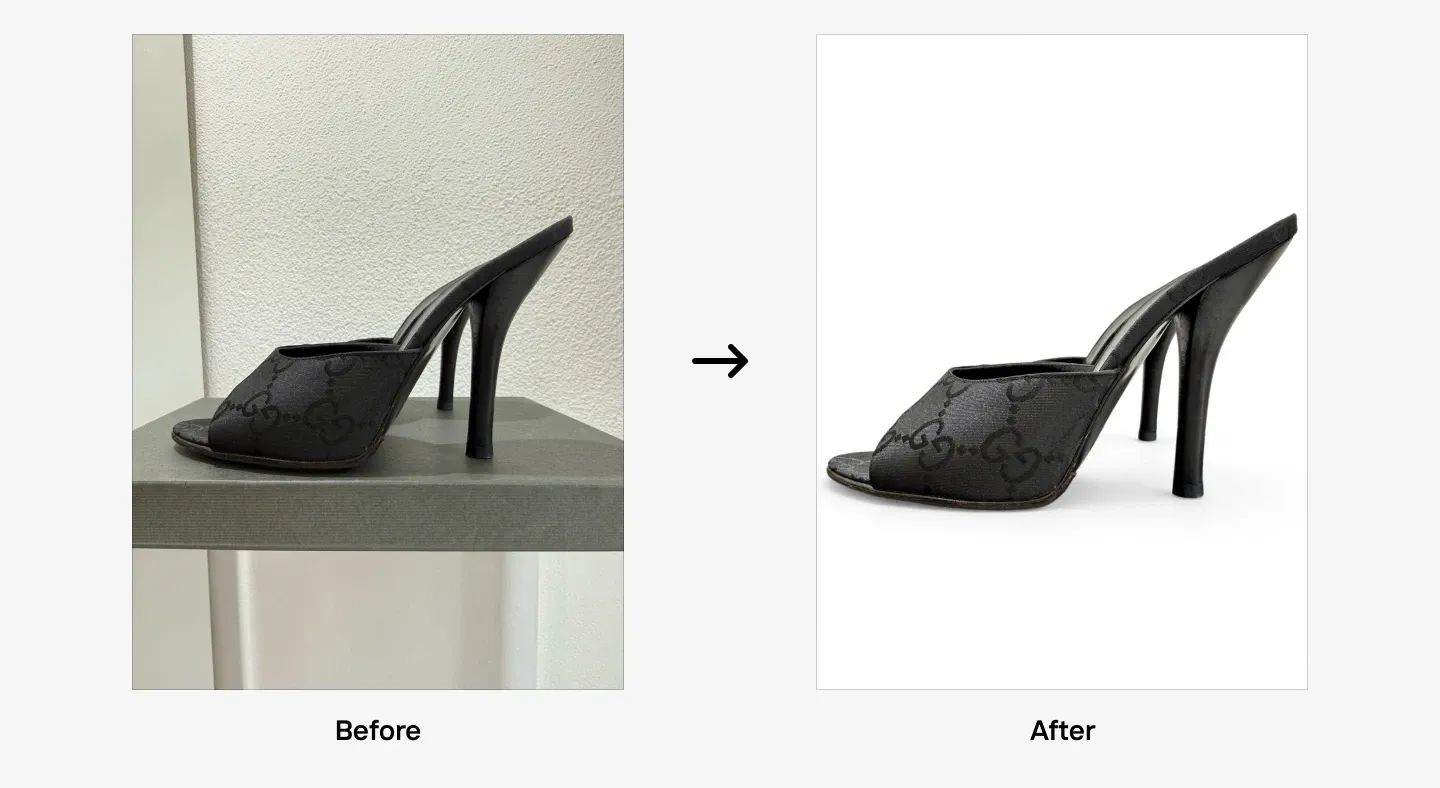 A seller photo of a Gucci mule before and after Photoroom processing. Source: Vestiaire Collective
Photoroom is the AI product photography platform that enables C2C fashion marketplaces to present seller photos at a premium standard while keeping every item true to what buyers receive. At Vestiaire Collective, better photos with no changes to the product delivered 5% higher liquidity and no negative impact on authentication, and gave the team the conviction to take premium photos into clothing next.