


Best AI productivity tools for e-commerce teams (2026)
Running an online business is operationally heavy. Product photos need updating. Listings need to stay consistent across marketplaces. Campaign visuals have to be adapted for new channels. Catalogs grow, seasonal launches pile up, and every change creates more manual work. This is where productivity breaks down for most teams, not in meetings or planning, but in execution.
AI tools can remove a lot of this friction, but only if they’re applied to the right parts of the workflow. Not every “AI productivity tool” is relevant to an online business, and very few actually help teams ship revenue-generating assets faster.
This guide focuses on AI productivity tools that matter for businesses that sell online, with an emphasis on visual production, listings, and catalog operations. Tools are grouped by the type of work they support, from creating product photos to adapting and distributing assets across marketplaces, ads, and social channels.
A central role in these workflows is played by Photoroom, an AI-powered product photography solution built specifically for commercial use. Photoroom helps businesses create professional listing visuals, realistic AI-generated scenes, virtual models, and branded catalog assets in one place, making it easier to maintain quality and consistency as volume increases.
If your goal is to improve productivity where it actually impacts online sales, this list is meant to help you focus on the tools that do that work well.
The table below maps each tool to a specific job in the ecommerce workflow. Each role is explained in detail in the sections that follow.
| Job in the ecommerce workflow | Tool |
|---|---|
| Product photography and listing visuals | Photoroom |
| Adapting visuals for promotions | Placeit |
| Short-form video for campaigns | VEED |
| Distributing visual content | Buffer |
| Short-form captions and promo copy | Ocoya |
| Drafting product and listing copy | ChatGPT |
| Optimising listings for search | Ahrefs |
| Analysing AI search visibility | Profound |
Product photography and listing visuals
Photoroom

Photoroom is an AI-powered product photography solution built for businesses that sell online. It acts as the foundational layer for e-commerce visual production, replacing manual workflows with a system designed for accuracy, consistency, and scale.
E-commerce teams use Photoroom to create clean, listing-ready product images without relying on studios, designers, or manual editing. Background removal, AI-generated scenes, virtual models, branded templates, and batch processing are handled within the same platform, making it easier to maintain visual consistency across large catalogs and multiple sales channels.
Photoroom also helps teams produce platform-ready visuals that match the requirements of major e-commerce platforms and marketplaces. Images can be exported in formats and dimensions suited for product pages. For example, storefronts built on Shopify can publish visuals without manual resizing or rework.
In addition to images, Photoroom can generate simple, product-focused video outputs designed to extend listing visuals into motion formats, without turning visual production into a full video editing workflow.
From a productivity standpoint, Photoroom addresses one of the biggest operational bottlenecks in e-commerce: keeping product visuals up to date as catalogs grow and channels multiply. By reducing manual work and coordination, teams can update listings and launch new products faster without compromising quality.
Best for
Small and mid-sized e-commerce teams, as well as larger B2B and retail organisations, managing product catalogs, listings, and visual updates at scale.
Limitations
Focused on product visuals. It does not cover copywriting, or campaign distribution.
When product visuals are easy to create and update, every downstream task moves faster.
Adapting product visuals across channels
Placeit

Placeit helps e-commerce teams adapt existing product visuals into marketing assets, including product mockups, banners, ads, and social content. It offers a library of templates tailored to promotional activities and allows teams to generate multiple versions quickly without deep design skills.
For online businesses, Placeit supports fast visual adaptation by making it easy to create channel-ready outputs in the correct sizes and styles for paid ads, email campaigns, mockups for physical products and social channels. This reduces manual resizing and creative bottlenecks that often slow down promotional workflows.
Best for
E-commerce and marketing teams creating promotional assets that reuse product visuals across multiple channels, especially offline.
Limitations
Not designed for producing original product photography or managing catalog-scale visual production.
Repurposing visual assets into short-form video
VEED

VEED is a video editing platform used by ecommerce teams to turn existing product visuals and campaigns into short-form video content for distribution. It is commonly used for promotional clips, paid ads, and social formats where speed and channel-specific output matter more than production complexity.
For online businesses, VEED makes it possible to extend product images and campaign assets into video without introducing a full video production workflow.
Best for
E-commerce and marketing teams creating short-form video from existing product visuals.
Limitations
Not designed for complex or high-production video editing not for specific product photography.
Distributing visual content across channels
Buffer

Its value is operational rather than creative, enabling a consistent publishing cadence tied to product launches, promotions, and campaigns without adding manual overhead.
Best for
Teams managing regular social publishing linked to e-commerce activity.
Limitations
Does not create visuals or manage creative workflows.
Creating short-form copy that supports visuals
Ocoya

Ocoya is an AI social media content tool used to generate short-form captions and promotional copy that accompany visual assets, particularly for social and campaign use.
It helps teams move faster when producing high volumes of posts by reducing the time spent writing repetitive or lightweight copy tied to visuals.
Best for
Teams producing frequent short-form promotional content around visual assets.
Limitations
Not intended for detailed product descriptions or long-form content.
Drafting product and listing copy
ChatGPT

ChatGPT is a conversational AI tool commonly used by e-commerce teams to draft and iterate on product descriptions, titles, variation text, and supporting copy.
Used well, it reduces the time required to move from a blank page to usable copy, especially across large catalogs.
Best for
Rapid drafting and iteration of e-commerce copy.
Limitations
Requires human review for accuracy, tone, and compliance.
Optimising listings for search visibility
Ahrefs

Ahrefs is an SEO marketing platform that supports the optimisation stage of ecommerce workflows by helping teams analyse how product and category pages perform in search.
It is used to identify keyword opportunities, diagnose visibility issues, and prioritise optimisation work once listings and content are in place.
Best for
Teams managing organic search visibility for e-commerce sites.
Limitations
Analytical only. Does not create visuals or content.
Optimising pages for AI search and retrieval
Profound
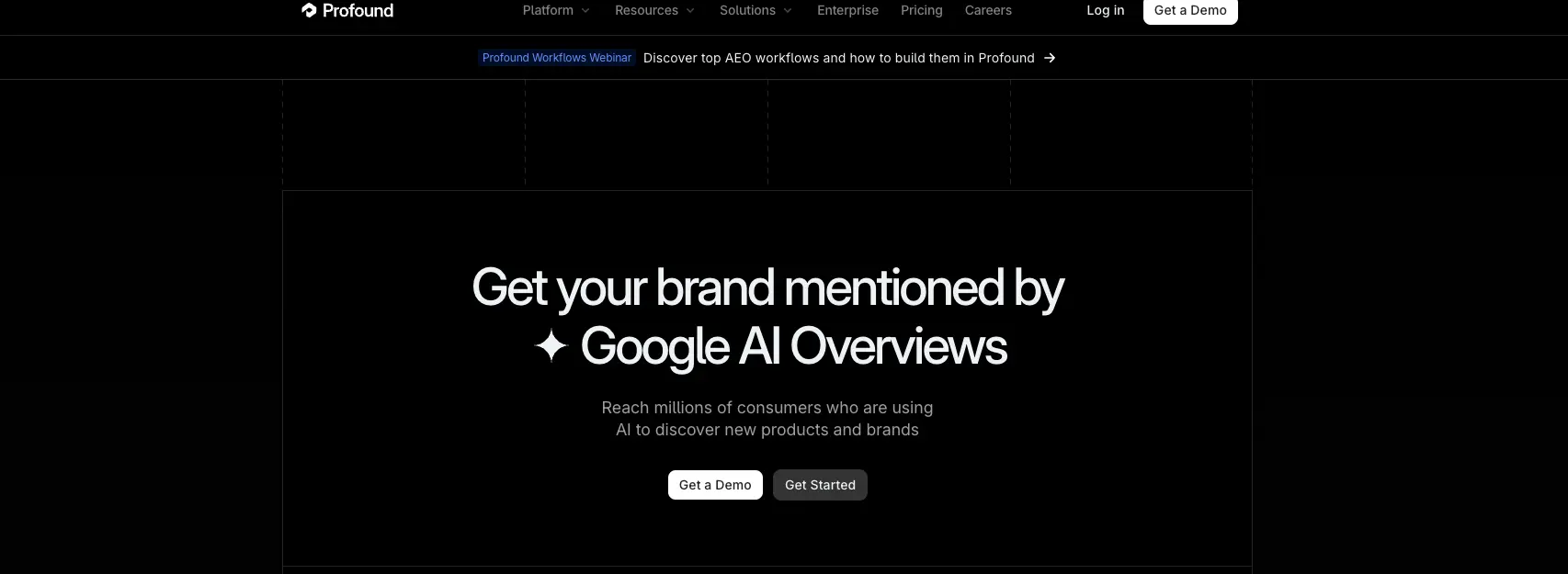
Profound is an AI search analytics platform used to analyse how brands, pages, and content are surfaced in AI-powered search and answer engines.
Rather than focusing on traditional rankings, Profound helps teams understand retrievability: which pages are surfaced by AI systems, how products are described, and where gaps or misrepresentations appear. This makes it a useful complement to classic SEO tooling once listings, visuals, and content are already in place.
Best for
Teams monitoring and improving how product pages and brand content appear in AI-generated answers and search experiences.
Limitations
Analytical only. Does not create visuals and depends on having a solid content and listing foundation.
Building an e-commerce productivity stack that scales
Productivity for businesses that sell online is rarely a tooling problem. It’s an execution problem. Most friction comes from producing, updating, and distributing assets at scale, then making sure those assets are actually surfaced where customers search and browse.
The tools in this list reflect that reality. They focus on creating accurate product visuals, adapting assets efficiently across channels, supporting copy and listings, and analysing how pages perform not just in traditional search, but in AI-powered discovery environments.
In practice, productivity comes from fewer tools, clearer ownership, and workflows designed around how e-commerce actually operates.
If product visuals are slowing down your e-commerce workflows, that’s often the fastest place to start. Improving how listing images are created, updated, and scaled is often the best way to unlock productivity across listings, websites, and marketplaces.
You can test how this works in practice by trying Photoroom for product visuals used in listings and catalogs. Start for free at photoroom.com, or download the mobile app on the App Store or Google Play.

Veruska AnconitanoI test and write about tools, workflows, and creative approaches that help small businesses work smarter, especially in AI product photography.