Skip to content

Why you should change your mobile app version format to [year].[week].[iteration]

As a software engineer, I’ve been trained to think that there’s only one way to version software: semantic versioning.

At Photoroom, we used to increment the major version number on big releases to celebrate. Recently, however, we moved our mobile apps to a versioning scheme like like 2025.51.01 (so [year].[weekNumber].[iteration])
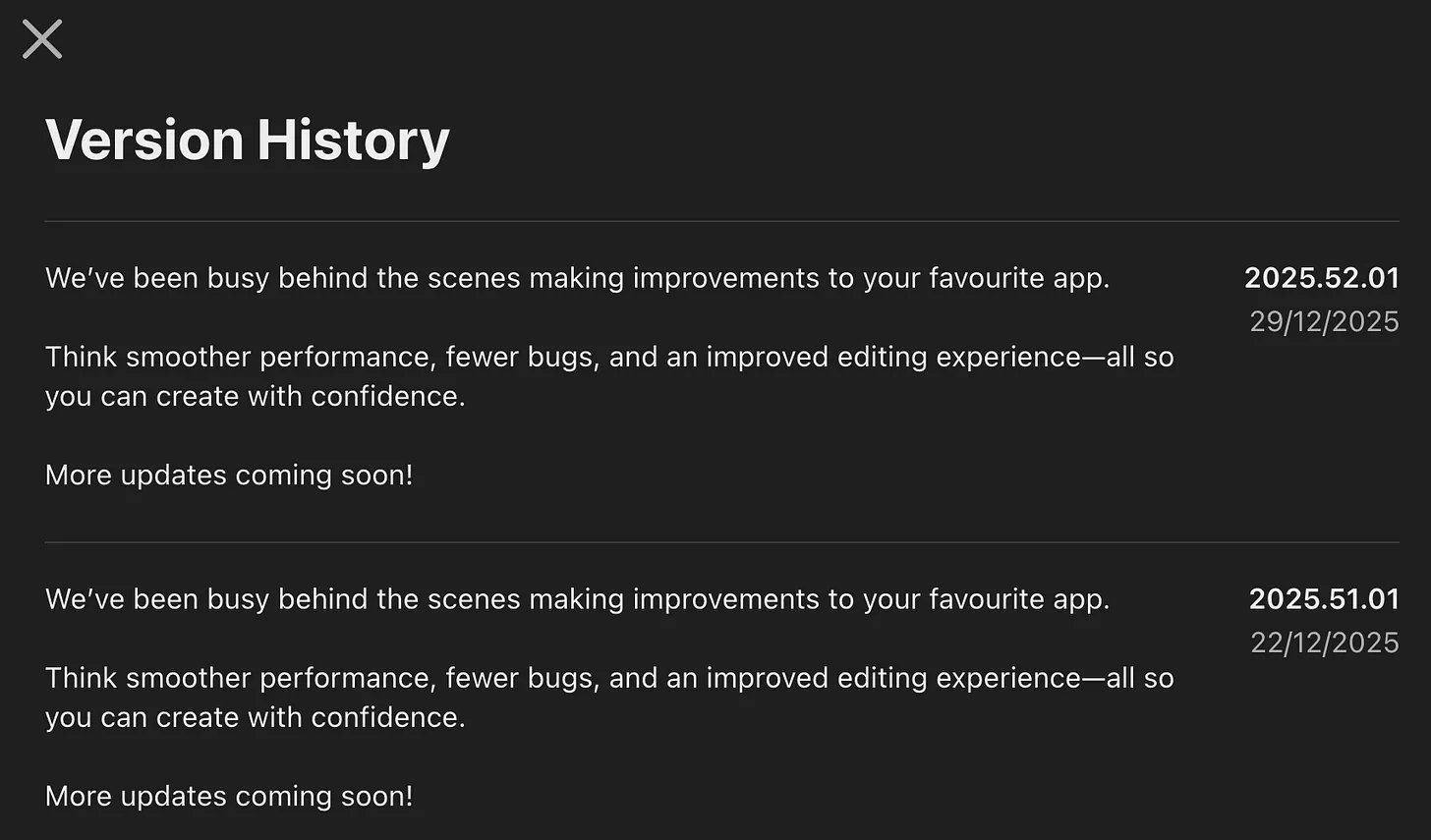
The main reason is convenience. At a glance you can know whether a user contacting support is on an old version or not or if a coworker reporting a bug forgot to update.

It’s also quite useful to understand version distribution. You can see below that most users on iOS are on version 2025.50.03 (meaning the third iteration of the 50th week of the year) and are progressively upgrading to 2025.51.01:
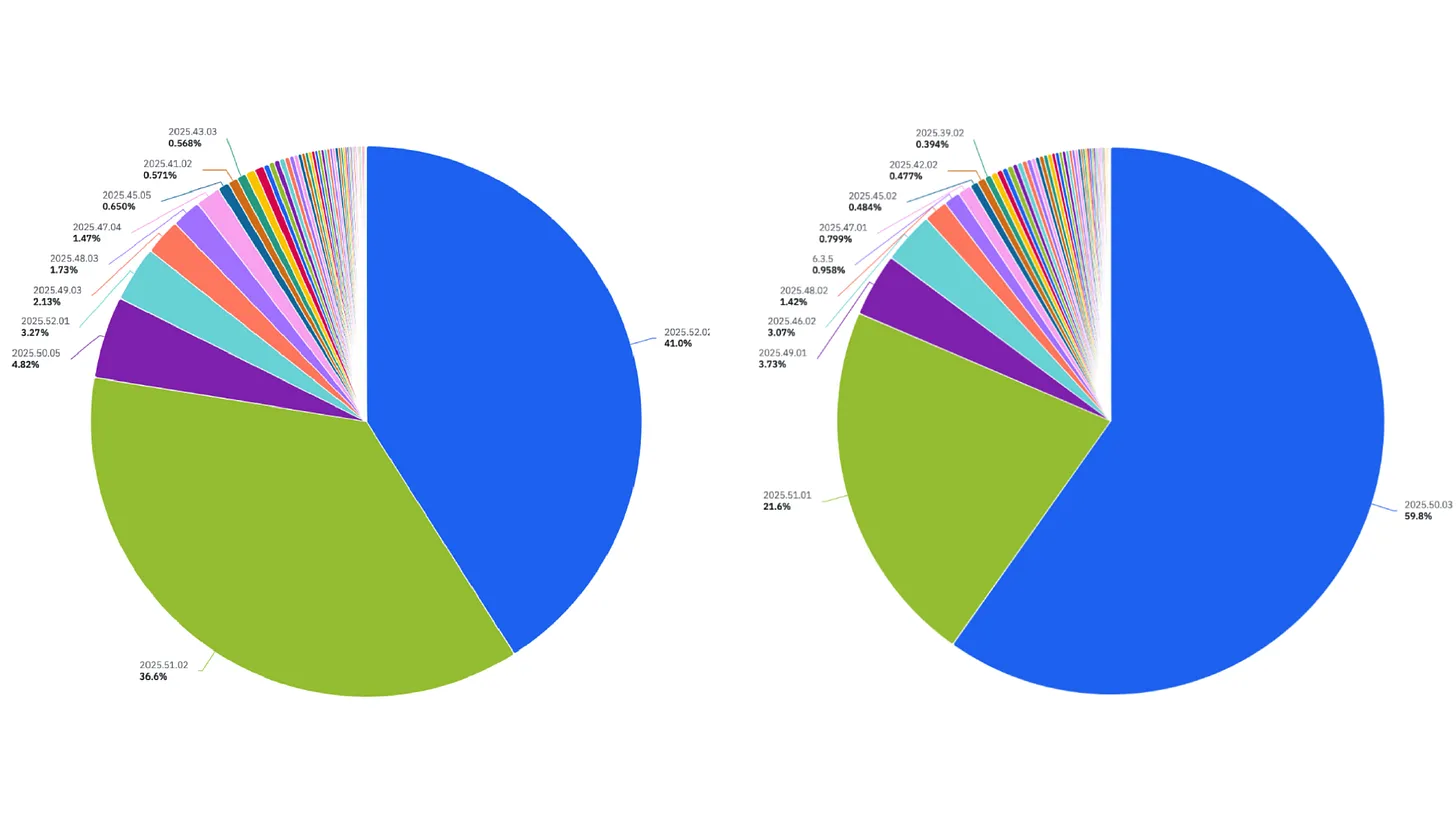
Version distribution, with Android on the left and iOS on the right
One convenient thing you can do is deprecate some routes by looking at the version number to know which clients are older than one year/some duration, here’s some pseudocode:

version = request.headers["pr-app-version"]
weeksSinceAppWasReleased = parseWeeksSinceAppRelease(version)
if weeksSinceAppWasReleased >= 52:
   return {error: "APP_OUTDATED", errorMessage: "Your app is outdated, please visit the app store to update"}

The downsides

As App Store version have to be incremental, so once you try this setup, you can’t go back.

When we implemented it, I also worried that such long version numbers would be a bit scary for users on the app store listing page, but it seems they don’t mind.

On my side, I’m still a bit worried when I see Uber’s super long version number
Overall, I’d recommend this setup in a heartbeat if you run a mobile app at scale.

If you find this article useful, go discuss it on Hacker News.

Eliot AndresCo-founder @ Photoroom
Why you should change your mobile app version format to [year].[week].[iteration]

Keep reading

From around the world to Photoroom: How we attract and nurture global talent
Matthieu Rouif
What I learned from vibecrafting my first physical product
Matthieu Rouif
How we measured the CO2 emissions of our AI models at inference time
Matthieu Toulemont
Building live collaboration in Rust for millions of users, part 5
Florian Denis
Mutagen tutorial: syncing files easily with a remote server
Eliot Andres
Building live collaboration in Rust for millions of users, part 4
Florian Denis
Post-mortem: Photoroom API service degradation – October 11th, 2024
Eliot Andres
Photoroom acquires GenerateBanners and launches Visual Ads Automation—first-to-market GenAI engine for large-scale ad creatives
Lyline Lim
Building Google-Docs-like live collaboration for a cross-platform app used by millions (in Rust)
Eliot Andres
Redesigning an Android UI used by millions
Aurelien Hubert

Sell faster with studio‑quality product visuals

Drive sales with professional visuals you can create in minutes, with brand consistency and control.