You’ll find plenty of advice about lighting, angles, and camera settings in lists of e‑commerce product image best practices. But in 2026, the biggest concern in e‑commerce product photography isn’t the images themselves—it’s having a scaling production workflow that doesn’t create bottlenecks every time a new product launches.
That shift matters because product images influence almost every stage of the buying journey. They play a major role in whether marketplaces approve a listing, whether shoppers click on it, and whether your product feels credible enough to buy.
The best practices in this guide focus on scaling your workflow to create conversion-ready images, and ways to make it easier for your products to get approved and listed.
Why do most product photo guidelines for e‑commerce miss what actually converts?
Most product photography advice and “best practices” lists are meant to help you create a better image. The problem is that a great-looking image won’t automatically drive higher conversion rates.
Your brand standards may be identical, but marketplace requirements vary. A product photo can still underperform if it doesn't meet marketplace requirements or takes too long to publish. So, sellers managing large numbers of products on multiple channels need to quickly and consistently produce high-quality images that match all the necessary specs.
Brands can set themselves apart with reliable ways to create, edit, approve, and publish their catalog at scale. That's what changes e‑commerce product photography from a creative task into a repeatable business infrastructure. And it's often the difference between taking days (not months) to publish a new catalog and constantly playing catch-up with the competition.
The e‑commerce photography standards that affect sales in 2026
Every sales channel has its own product listing image requirements and recommendations. Some affect whether a product can be listed or promoted. Others influence how professional and trustworthy your brand appears to shoppers. The requirements differ, but the outcome is the same: Product images that don't meet expectations can cost sellers visibility, conversions, and valuable time.
The table below compares some of the most important image requirements and recommendations across Amazon, Shopify, and Google Shopping. While the specifics vary, each platform rewards product images that are high-resolution and accurately reflect what you’re selling.
Requirement | Amazon | Shopify | Google Shopping |
Main image size | Minimum 500 px and maximum 10,000 px on the longest side; at least 1,000 px recommended to enable zoom | No minimum requirement; Shopify recommends high-resolution images for a better customer experience, but has a 20 MB and 25 MP (5,000 x 5,000 px) upload size limit | Minimum 500 × 500 px required starting January 31, 2027; 1,500 x 1,500 px or larger recommended |
Background requirements | Main images require a pure white background (RGB 255, 255, 255) | No background requirement | Product must be clearly visible; avoid promotional overlays and distracting elements |
Promotional text, logos, and watermarks | Not allowed on main images | Allowed, but generally not recommended for product pages | Not allowed |
AI-generated imagery | Must accurately represent the product being sold | No platform-wide AI image requirements | AI-generated product photos must include IPTC DigitalSourceType metadata identifying AI origin |
Impact of non-compliance | Images may be suppressed or rejected; technically non-compliant images won’t upload | No listing penalties, but image quality can affect conversion rates | Products may be disapproved or receive limited visibility |
How to produce listing-ready product images that drive conversion in 3 steps
Meeting marketplace requirements for a single image isn’t challenging, but sellers need a reliable way to apply those standards across every product they list.
That's where many image workflows break down. A product visual might look great, but getting it ready for all of your sales channels often involves repetitive editing using multiple tools, in turn creating inconsistent results.
The most effective product image workflows solve those problems with a repeatable process. Photoroom is built for that process, helping sellers create, standardize, and update product images at scale.
1. Define your source image intake standards
A scalable product image workflow starts long before editing happens. Every image entering your workflow should meet a consistent standard. Products should be clearly visible, photographed against a clean background, and captured at a resolution that supports every marketplace you sell on (often at least 500 x 500 px).
Without intake standards, small inconsistencies multiply across a catalog. Different image sizes, lighting conditions, and product angles create more editing work and make it harder to maintain a consistent brand presence. Photoroom can handle some of the steps necessary to make your marketplace images consistent through bulk positioning, background removal, and WebP conversion. But establishing clear source image requirements up front reduces manual effort down the line and creates a stronger foundation for the rest of the workflow.
2. Produce marketplace-ready images from a single source photo
Once your source images are ready, the next challenge is adapting them for different sales channels. No two marketplaces have identical expectations. For instance, a strong image resolution on Google Shopping is at least 1,500 x 1,500 px, while Shopify just has a maximum file size of 25 MP (or about 5,000 x 5,000 px).
Creating all these separate iterations manually is time-consuming, especially as catalogs grow. Photoroom's Background Remover and AI Backgrounds features help sellers prepare marketplace-ready images without manual masking or retouching. When products haven't been captured in every setting you’d like, you can create new variations from existing images using AI-generated backgrounds. Then, apply common e‑commerce formats like white background product shots and positioning the image in frame to meet every marketplace’s requirements without creating new shot lists or scheduling additional studio sessions.

3. Apply consistent formatting across your full catalog
The final box to check while building your product image workflow is consistency.
Even high-quality product images will look unprofessional when image dimensions, spacing, shadows, backgrounds, or branding vary from one listing (or image) to the next. Those inconsistencies become more noticeable as catalogs expand across multiple product categories and sales channels. Shoppers often compare prices for the same product between marketplaces, and any obvious discrepancies can hurt their trust in your brand.
Photoroom helps sellers standardize visual presentation across large catalogs with features like Brand Kit, batch editing tools, and workflow automations. Instead of updating images individually, teams can apply consistent formatting on up to 250 images at once. For larger operations managing thousands of SKUs every month, Photoroom’s API can integrate image processing directly into your existing production workflow. The result is a catalog that looks cohesive, meets platform requirements, and can be updated without slowing down your next release.
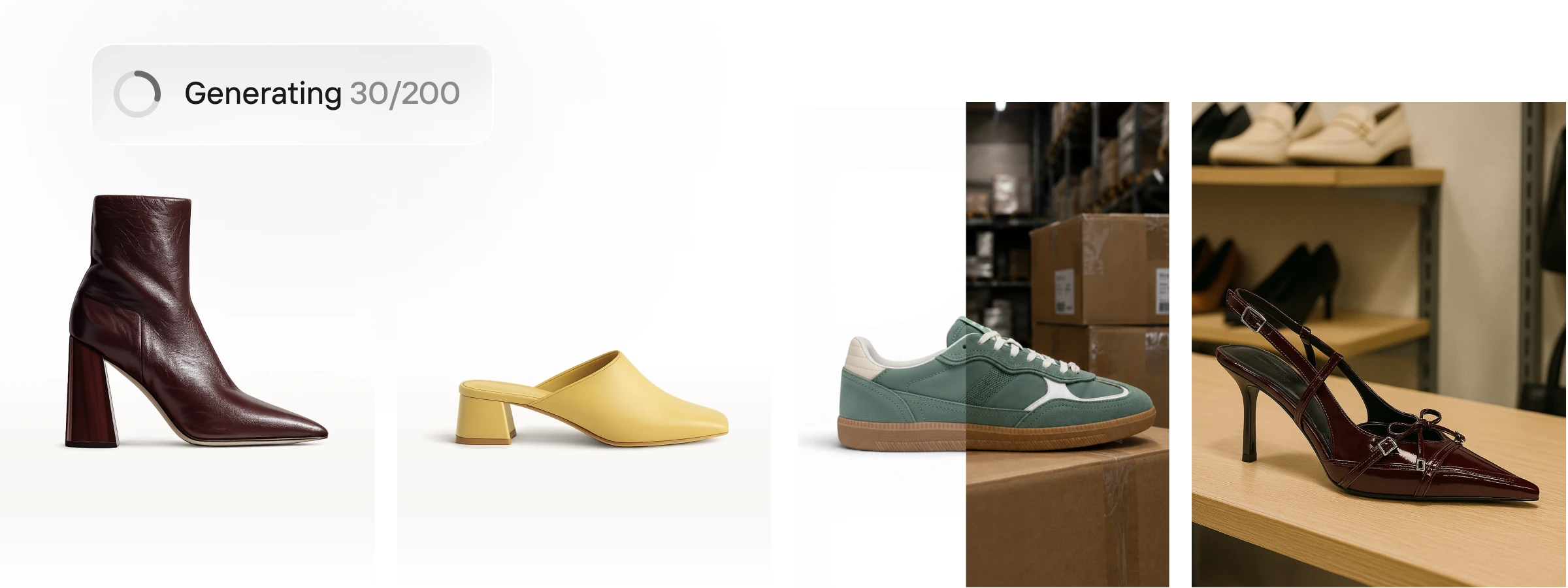 Photoroom removing the background from multiple product photos, leaving a clean cutout on a transparent background
Turn product image best practices into a repeatable process
The strongest product image workflows are built on scalable infrastructure, not one-off edits. When product image creation and formatting follows a consistent system, teams can launch products faster and maintain brand and marketplace standards while spending less time managing manual work.
Photoroom helps sellers build that system. From background removal and AI-generated product scenes to batch editing and catalog-wide standardization, Photoroom is designed to support the full product image workflow from source photo to published listing.