
Why you should change your mobile app version format to [year].[week].[iteration]

As a software engineer, I’ve been trained to think that there’s only one way to version software: semantic versioning.

At Photoroom, we used to increment the major version number on big releases to celebrate. Recently, however, we moved our mobile apps to a versioning scheme like like 2025.51.01 (so [year].[weekNumber].[iteration])
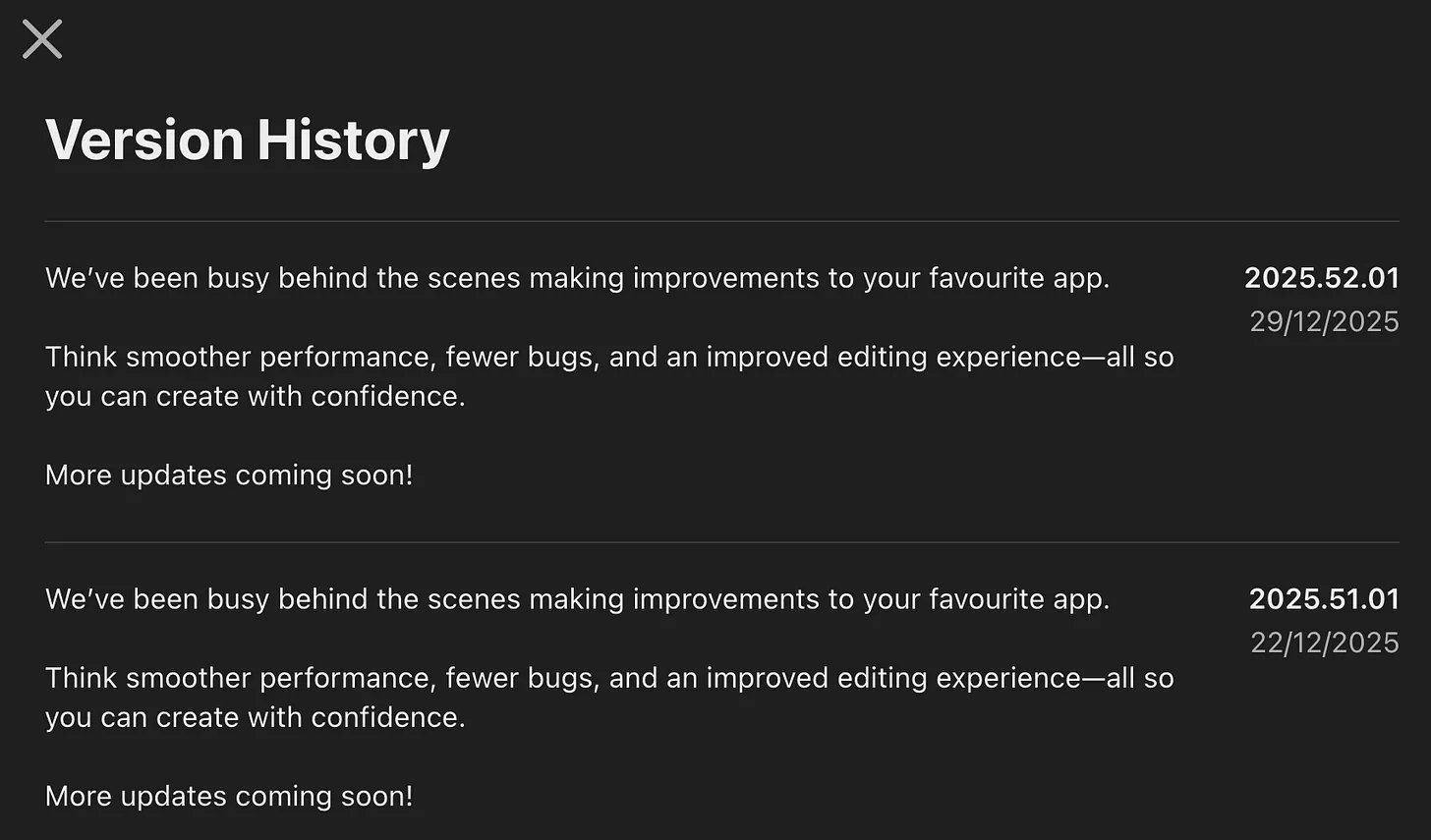
The main reason is convenience. At a glance you can know whether a user contacting support is on an old version or not or if a coworker reporting a bug forgot to update.

It’s also quite useful to understand version distribution. You can see below that most users on iOS are on version 2025.50.03 (meaning the third iteration of the 50th week of the year) and are progressively upgrading to 2025.51.01:
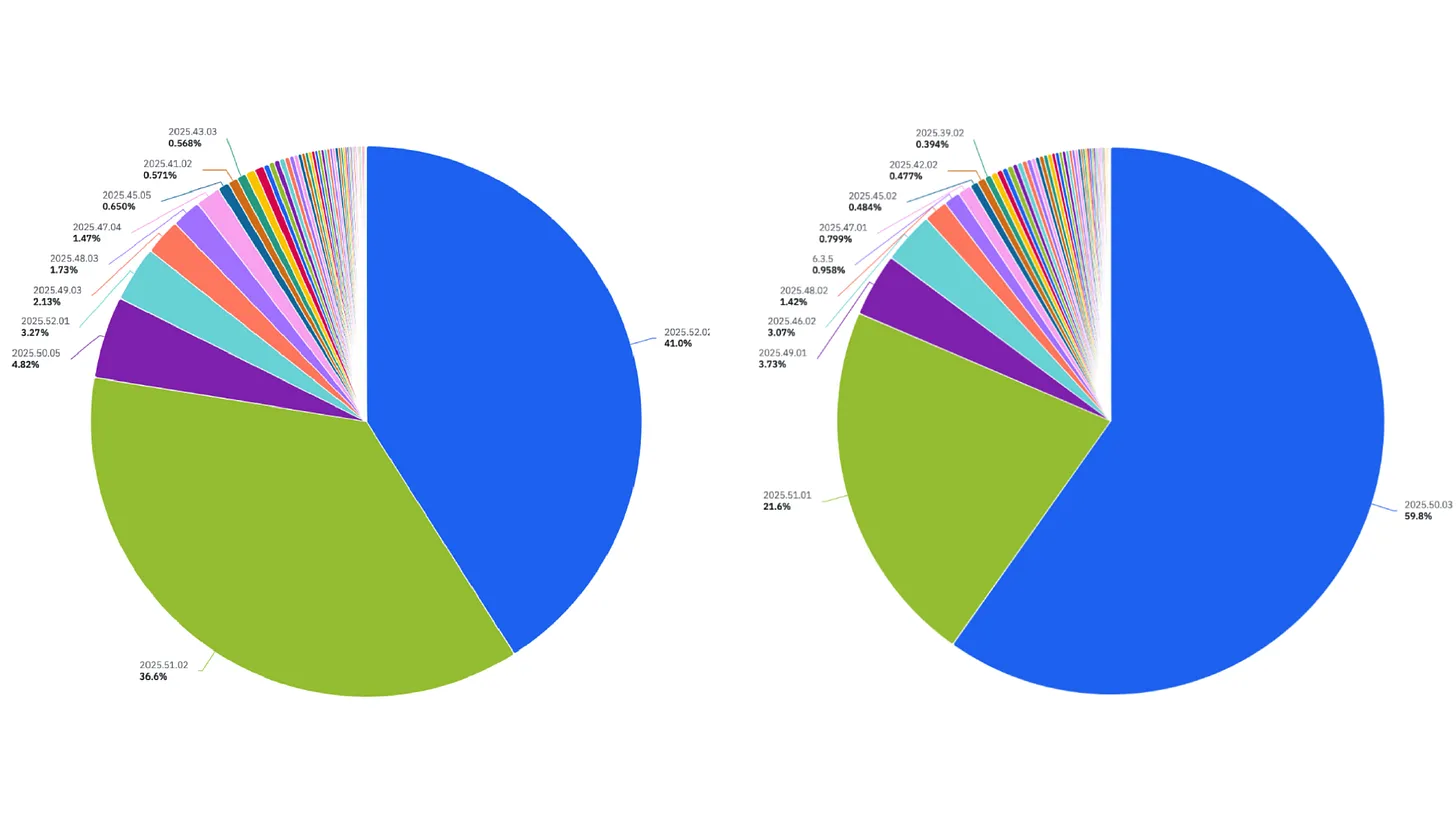
Version distribution, with Android on the left and iOS on the right
One convenient thing you can do is deprecate some routes by looking at the version number to know which clients are older than one year/some duration, here’s some pseudocode:

version = request.headers["pr-app-version"]
weeksSinceAppWasReleased = parseWeeksSinceAppRelease(version)
if weeksSinceAppWasReleased >= 52:
   return {error: "APP_OUTDATED", errorMessage: "Your app is outdated, please visit the app store to update"}

The downsides

As App Store version have to be incremental, so once you try this setup, you can’t go back.

When we implemented it, I also worried that such long version numbers would be a bit scary for users on the app store listing page, but it seems they don’t mind. On my side, I’m still a bit worried when I see Uber’s super long version number:

Overall, I’d recommend this setup in a heartbeat if you run a mobile app at scale.

If you find this article useful, go discuss it on Hacker News.

Eliot AndresCo-founder @ Photoroom

Why you should change your mobile app version format to [year].[week].[iteration]
设计你的下一张精美图片

设计你的下一张精美图片

无论是销售,推广还是发帖,通过出众设计,生动呈现你的创意。

Keep reading

Photoroom acquires GenerateBanners and launches Visual Ads Automation—first-to-market GenAI engine for large-scale ad creatives
Lyline Lim
Building a modern data stack to ship models to millions of users
Benjamin Lefaudeux
The value of values: What we learned from an afternoon spent drawing Axolotls
Lauren Sudworth
Photoroom 2024 product recap
Jeanette Sha
Photoroom partners with Genesis Cloud to lower carbon emissions
Lauren Sudworth
Embracing radical openness: How a “No DM” Slack policy drives impact at Photoroom
Matthieu Rouif
Redesigning an Android UI used by millions
Aurelien Hubert
Working smarter with AI-led qualitative analysis at Photoroom
Cori Widen
The Hunt for Cheap Deep Learning GPUs
Eliot Andres
4 times faster image segmentation with TRTorch
Matthieu Toulemont